What Erosion Can Teach Us About Flow, Spirals, and Our Economy — Paul Krafel
“When something accumulates or diminishes, there is flow,” teaches Paul Krafel. He’s a modern allegorist, philosopher, and above all, a man…
“When something accumulates or diminishes, there is flow,” teaches Paul Krafel. He’s a modern allegorist, philosopher, and above all, a man of nature.
A park ranger and naturalist for nearly a decade, Paul noticed that when there is run off, erosion occurs because the water cannot be absorbed fast enough. “The rain has power to create or destroy soil.”
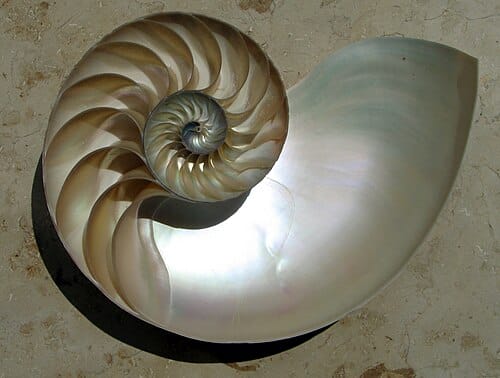
“This is the spiral effect,” he says.
An upward spiral is not the opposite of a downward spiral, but in fact part of the same system that’s working in one direction or another. They both have the same sequence of cause and effect.
“Can you take a downward spiral and shift it to spiral in the other direction?”
Paul learned to climb up the hills above the erosion to dig gullies for the water to soak in. This seemed to reverse the spiral. He transformed entire mountain slopes this way.
Here’s what he learned:
- Go high into the drainage, up to the slope, to look for where you can make a change
- Create a new path, before trying to oppose the current path
- If you can begin to reverse the spiral, an ally will emerge and the work will grow on itself
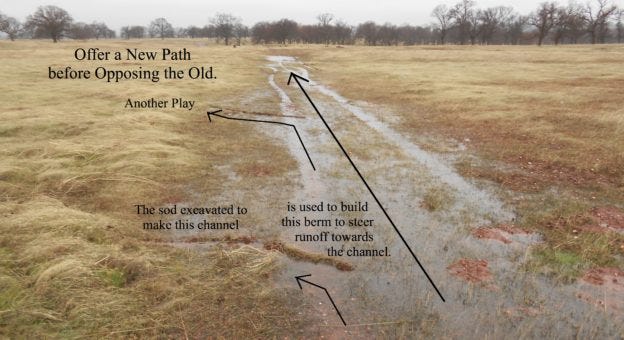
“So many downward spirals that drain earth and drain humanity. The fields are telling me, at the heart of every downward spiral, there lies an ally coiled, ready to spring forth if a balance can be shifted.
But with things on this scale, what can I do?
Go high in the drainage, what does that mean? I tried to think of it in terms of power rather than rain. And that leads me up into the headwaters of our culture, and I’m looking for places or beliefs or practices that are somehow keeping our power soaked in, so that it runs off instead.
In a world like this, hope is naive. In a world that is ultimately destined to run down, all we can ask for is comfort in our own time.
And that I believe is where downward spiral starts. Because then the smart thing is to externalize costs onto others and to internalize as much of the profits as you can upon yourself. And that allows you to acquire more wealth, which gets you more access to power.
This creates boundaries between yourself and those to whom you’re going to externalize your costs onto. Instead, I start seeing myself and the relative relationship to boundaries. Who has more power?
Our need to have more in the presence of the other, far outgrows our actual needs. We start to harvest too much and that starts tipping balances in the world and things start to spiral downward.
The world has to run down. That experience of seeing the world running down, leads other people into that spiral.
Water can not flow uphill, but it can soak in. We have no idea what’s possible. Once upon a time soil and flight did not exist and now it does. What is possible?
We live within a vast upward spiral that over a hundreds of millions of year has risen into new possibilities. We have no idea what’s possible. Once upon a time — flight, soil, and consciousness did not exist. And now they do. We have been gifted with hands to touch the waters and feet to stride the earth, and visions to see patterns, and voices to join us together. What is possible with that gift?
We have no idea.
Allies can emerge to bring into the world new impossibilities.
Let us become allies for each other, helping each one of us to soak our power in deeper so that more possibilities can grow within our community. “
Did someone say interdependence? This was written after attending a dinner put on by the MetaCurrency Project, where The Upward Spiral video was shown.
When I first started watching, I was distracted by the video quality, but if you listen to he says and really let it all soak in, his words are quite profound, far reaching, and full of wisdom that we can all use as everyday tools. If you’re interested in Paul Krafel’s work, you can read his book or learn more about how he’s spent time reversing spirals in nature.
To learn more about Chelsea Rustrum and read more pieces like this, head to rustrum.com.