The suits we wear — the suits I refuse
How can we truly see one another, moment to moment?
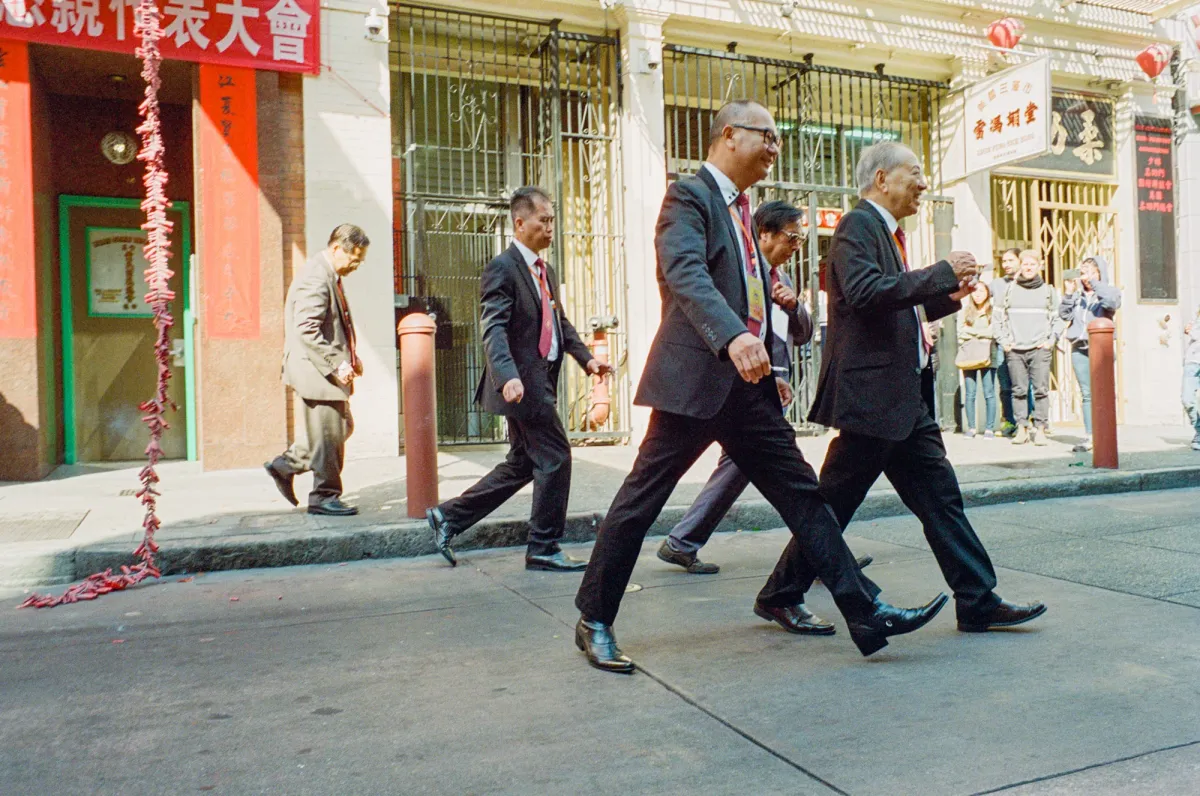
Sometimes, when I walk in the Financial District of San Francisco, I have a little chuckle.
People are dressed like penguins, moving faster than their hearts can keep up with, distracted, and oftentimes scowling. They are glued to their phones, headsets, and everything that’s out there — not so much paying attention to their inner dialogue or the discomfort in their body.
While I don’t do that — perhaps I have another version of this.
When I speak professionally or meet someone for the first time (if I’m in a happy energetic zone), I talk from a place of comfort, curiosity, and openness. I no longer try to impress people by sounding smart, edgy, or interesting. I figure that’s just something I either embody or don’t and it’s so personal that I’d rather just see the other person in front of me. My ego isn’t what I lead with.
Though…
Part of what I do to deflect to not be fully seen is to ask hard questions. Sometimes even intuitively probing for what the other person can see, but can’t explain or doesn’t want to say. When asked those same sorts of questions, I either clam up or begin to tell stories. It’s only when someone is truly with me, asking follow up questions, and fully invested in hearing the answer that I will open.
All of this has me thinking about our suits and why we wear them —these physical and psychological suits.
What are we afraid of?
I think part of why I write is to be seen.
I want people to know the full complexity of my thinking, feeling, and process of understanding. I don’t want to be boxed. I don’t want to be smart for you you — so smart that if I act silly or make a mistake you’ll judge me. I don’t want to be so professional that I’m playing a role, suiting up so much before a talk that I can’t be myself. I don’t want to be feminine at every turn, so feminine that you will be blindsided when I erect masculine energy.
Fluidity is lost in ego.
Murdered by identity.
Slayed by social groups.
In an attempt for safety, we close. We conform. We attach. And in that process, I wonder how much we’re detaching from the truth?
I wonder if we are even in touch with what that truth is.
I’m not suggesting that we should detach from one another, but rather that our attachments don’t have to be so rigid that that prevent us from feeling through our own journey.
Personally, I can be in business mode one moment, social mode the next, flirtatious, and then serious again — all within an hour or two. I have a wide emotional range. And I don’t want to stifle my projection onto the world by concocting a version or a personal brand that limits self expression.
I imagine, for the average person — I’m hard to understand. I’ve gotten the feedback of flakey, flighty, too comfortable, overly open, and superficial many times. As I’ve gotten older, the impression falls more into the “too comfortable” category which amazes me.
Can you really be too comfortable? If so, how? What does that even mean? Am I too bold? Does my comfort in my comfort in my skin make you feel so less so in yours?
My conclusion is that we’re terrified of people who don’t play the game. When I opt out, I’m going against the construct in subtle and yet radical act of non-conformity.
For the record, I plan to continue to question this overly yang world I’ve found myself born onto.
I plan to heal myself. I plan to help heal our relationships with economic value. I plan to be a voice and an alchemist who can translate all of the realities happening simultaneously and the consciousness that wants to be heard, experienced, and broken wide open.
To do this, I have to accept myself. I have to see all that I am and to show up with authenticity.
To be a voice is often polarizing and I’m starting to accept that.
My only hope is that by being myself and on this journey that I help give other people permission to be themselves. To sit with paradox. To weave a personhood that’s directed not by society, but by soul fire. To allow for contradiction. And not being liked. To lead with kindness. More thank you’s and I’m sorry’s. Wider range. Greater possibility.
And ultimately, radical acceptance — which is love.