All People Are Stakeholders of Technology — Ethics & Blockchain
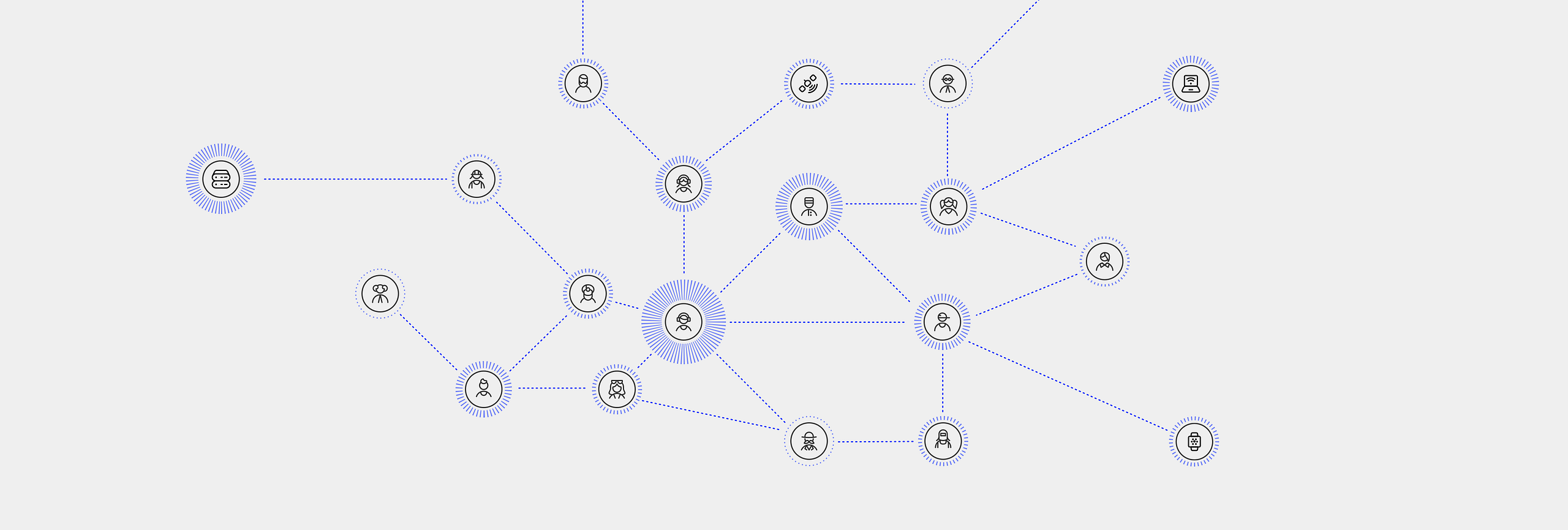
We sit at the precipice of this web of invisible connectivity — a weaving of people, places, and commerce.
We sit at the precipice of this web of invisible connectivity — a weaving of people, places, and commerce.
In the early phases of the world wide web we started chatting with strangers, eventually sharing 140 character ideas into the ether, exchanging goods and services outside of traditional supply chains — peer-to-peer, directly with each other.
Then things changed.
The internet became a walled garden of social networks, platform monopolies, and a single search engine for discovery.
But the reality is — data is ultimately limitless, people are naturally free, and the rules that codify and bind us are still being written.
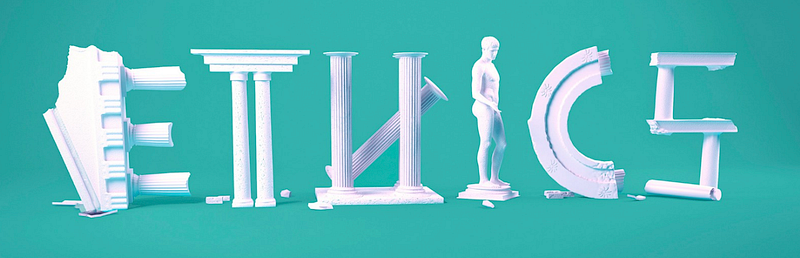
Blockchain companies including specific currencies, networks, and protocols have some of their values hardcoded into the way the technology works — but as leaders and creators, we must go a step further.
How do we serve and protect the future with our mind and conscience?
And how do we balance what we’re creating now with the possibilities and limitations of future technologies?
Policy makers are scrambling to make sense of the speed and implications of current, let alone future technologies.
Now is the time to embrace the we that we have the opportunity and responsibility to be: citizen policy makers, activist developers, and designers of conscious businesses.
We must rewrite the missteps of runaway capitalism and centralization and prevent the adulteration of blockchain technology.
Currently…
We have a single search engine, driven by advertising — manipulating search results, social networks that game our time and emotions, and fake news which distorts our reality. To add insult to injury, there are data brokers who sell our digital souls to the highest bidder.
We can do better.

We’re in a moment and it’s not a long moment, so stick with me. We have the capacity to take a stand, have collective and meaningful dialogue, and to protect and live out our ideals through technology.
This moment isn’t new — We had a similar one in the late 90s and the early 2000s — at the beginning of the internet. In the last 30 years — we the citizens, the developers, the dreamers, and the leaders of technology lost touch with our collective power.
Let’s take our power back.
The Satoshi white paper wasn’t written so that banks could do business more efficiently — it upheld the standards the internet originally attempted to set through a more directed encoding into the technology itself.
In fact, the first sentence of the Bitcoin white paper reads:
“A purely peer-to-peer version of electronic cash would allow online payments to be sent directly from one party to another without going through a financial institution.”
And here we are, a decade later in a bubble of a moment where tech and human ethics are one and the same — intersecting with policy, commerce, currency, and governance.
The way we relate, buy, vote, and agree — our freedoms and incentives — are all intermingled with technology.
Blockchain technology sits at the center of all of this. And emergent technologies will be bound by decentralized ledgers. There are silent yet ubiquitous recorders, verifiers, and tools in our homes, workplaces, on the streets, and in our pockets…
Artificial intelligence, virtual and augmented reality, and the internet of things are running in the background, creating our foreground.

And blockchain has the potential to be the binding agent or the artificial intelligence layer, if you will, of all of these technologies.
Currency and programmable incentives will be infused with emergent technologies —and if we start now, we can imagine and create a decentralized tech utopia. We can can program our values in every interaction and transaction.
The other option is to allow the engines of centralized power to recreate the same paradigm all over again — do we really want four mega platforms ruling commerce? How will this impact us when contracts are self-triggered systems of exchange?
We need to write the rules now.
In some ways this shift represents the people against the establishment, but perhaps a better way to look at it is the people leading the establishment. The people created the Declaration of Independence — now it’s time to do this in digital formation — and globally.
That’s where the Blockchain Code of Ethics comes in.
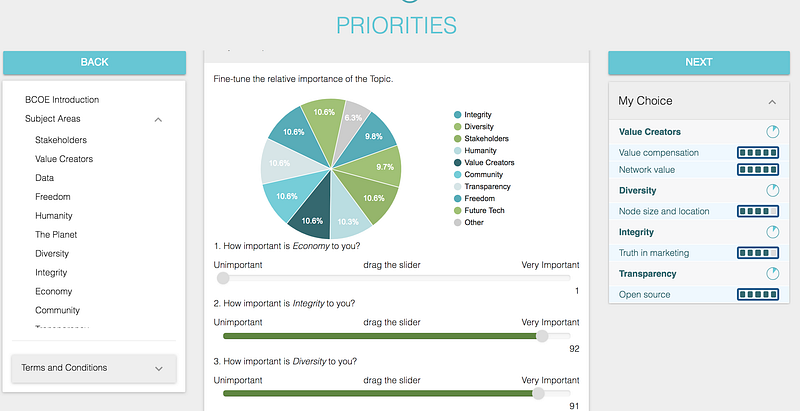
The Blockchain Code of Ethics, or BCOE for short — will start as a discussion — a meaningful place for dialogue where each co-creators opinion is weighted as one vote and subject areas as well as specific ethics can be weighted according to that persons particular interests.

Participants can offer new ideas, amendments, or opt to remove particular ethics. The liquid democracy platform will look for the arc of agreement amongst participants verses consensus.
BCOE aims to build a movement of conscious co-creators who will uphold a high standard for themselves and society and take a stand for a values centric approach, which will ultimately impact the future of business and policy.
This is not an empty space to pontificate and debate, but rather an open field with the potential for the echo to be felt and implemented across the world.
We are stronger and far more powerful than we think — especially if we act together, through technology with our digital swords and human hearts.
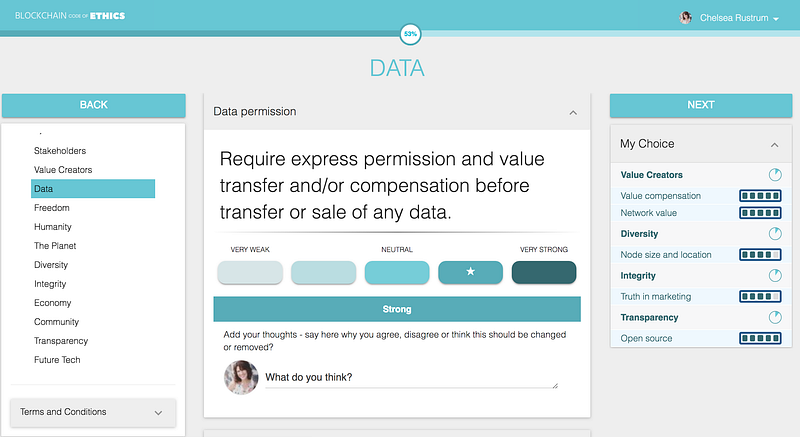
In the beginning, this Code of Ethics will be a framework for what ethical blockchain technologies and organizations look like — through their actions, and accountability to the following subject areas:
- Data
- Value creators
- Humanity
- Stakeholders
- Planet
- Diversity
- Transparency
- Freedom
- Integrity
- Community
- Economy
- Future technologies
Currently, there are 50 individual ethics under the above 12 subject areas, which are available for dialogue, interpretation, discussion, and voting. There are a handful of mindful technologists that are adding their thoughts for final refinement before the BCOE goes out to a larger group.
Ping me if you or your organization would like to be involved.
This is just the beginning. I look forward to what we will create together.
Check out BlockchainCodeofEthics.com to learn more.